How Structured SEO Scales?
Your Website Isn’t Slow — Your Structure Is.
Most founders blame slow growth on the wrong things — Content, Speed, Even Design. But if your SEO is built on random tactics instead of a clear system, it can’t scale. Structured SEO changes that. It turns your digital presence into a Measurable, Repeatable Process. It ensures that every Keyword, Link, and Landing Page has a Purpose — not just a Presence. When you treat SEO like a System, Not a Checklist, Your Visibility Stops Depending on Luck.
The Real Problem: Tactics Without a Framework
Many companies jump into SEO with enthusiasm — new tools, new keywords, and an eager agency.
Three months later, the conversation sounds like this:
“Traffic is up, but conversions are flat.”
“Our rankings keep changing.”
“We get reports, but not results.”
This isn’t failure — it’s fragmentation.
Tactics build activity; systems build momentum. A system aligns every effort — from content to crawl — around business goals. When structure is missing, even the best strategy creates noise, not growth.
Without a defined SEO structure, every step adds motion but not progress.
What Structured SEO Really Means
Structured SEO is the opposite of one-off optimisation.
It’s a governance model for search performance — how your content, links, and analytics talk to each other.
 Information Architecture
Defines how Google reads your business
 Content Semantics
Connects search intent to real business needs.
 Technical SEO
Ensures speed, crawlability, and stable indexing
 Measurement Systems
Turns activity into revenue dashboards.
Structured SEO doesn’t Replace Creativity; it Powers it with Consistency.
Tactical SEO vs Structured SEO
A clear comparison of SEO strategies
Tactical
Structured
Disorganized
Random keywords without a cohesive strategy lead to confusion.
Systematic
Organized keywords create a clear path to success.
Fragmented Efforts
Content lacks focus and alignment with measurable goals.
Coherent Approach
Content is strategically aligned with user intent and metrics.
Unpredictable Growth
Results are inconsistent and difficult to track with tactics.
Scalable Growth
Systems ensure consistent results and manageable expansion over time.
ROI
Return on investment is unclear and often disappointing.
Measured
ROI is tracked and linked to each strategic effort.
Tactical
Disorganized
Random keywords without a cohesive strategy lead to confusion.
Fragmented Efforts
Content lacks focus and alignment with measurable goals.
Unpredictable Growth
Results are inconsistent and difficult to track with tactics.
ROI
Return on investment is unclear and often disappointing.
Structured
Systematic
Organized keywords create a clear path to success.
Coherent Approach
Content is strategically aligned with user intent and metrics.
1
Systems ensure consistent results and manageable expansion over time.
Measured
ROI is tracked and linked to each strategic effort.
A Clear Strategy is Key for Digital Marketing Success.
Why Structure SEO Scales?
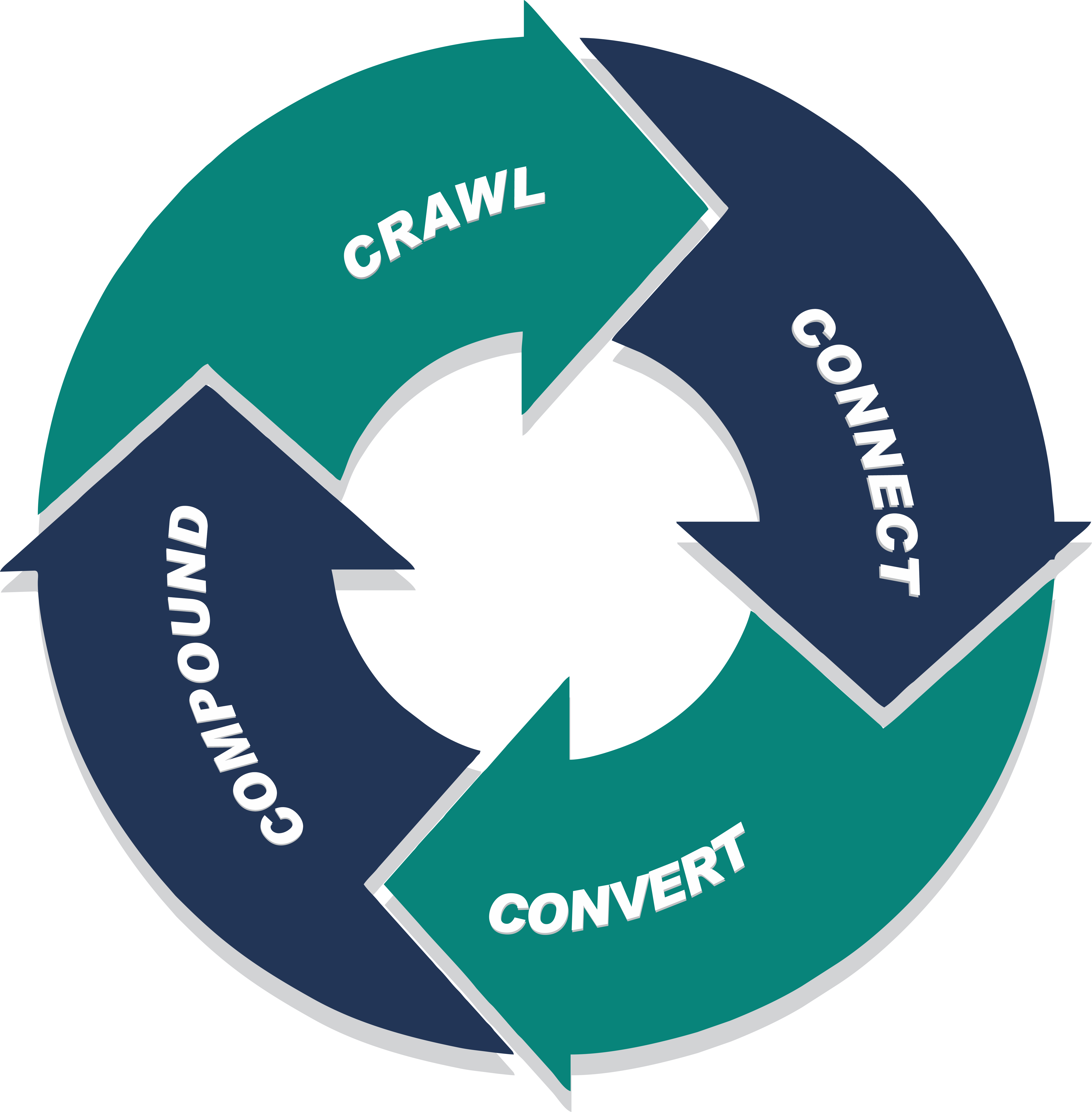
Think of it like compound interest.
Each small fix — A Faster Load Time, A Better Link Path, A Clean Schema Multiplies Over Time.
A single blog can fuel five outcomes:
Ranking improvement → Internal link authority → Topical relevance → Lead magnet traffic → Retargeting visibility.
When your SEO is structured, every new asset strengthens the rest. When it’s not, every new page starts from zero. That’s why Systems, Not Tactics, Create Scale.
The Factory Without a Conveyor Belt
Imagine running a factory without a conveyor belt.
Each worker builds something, but no one knows what comes next.
That’s how most websites run SEO. Content writers, developers, and marketers all work hard — but disconnected.
Structured SEO gives you the conveyor belt:
A workflow where every piece fits together, every page has a function, and every click contributes to a measurable outcome. When your SEO moves like a system, you can predict growth instead of chasing it.
The 4S Framework for Scaling SEO
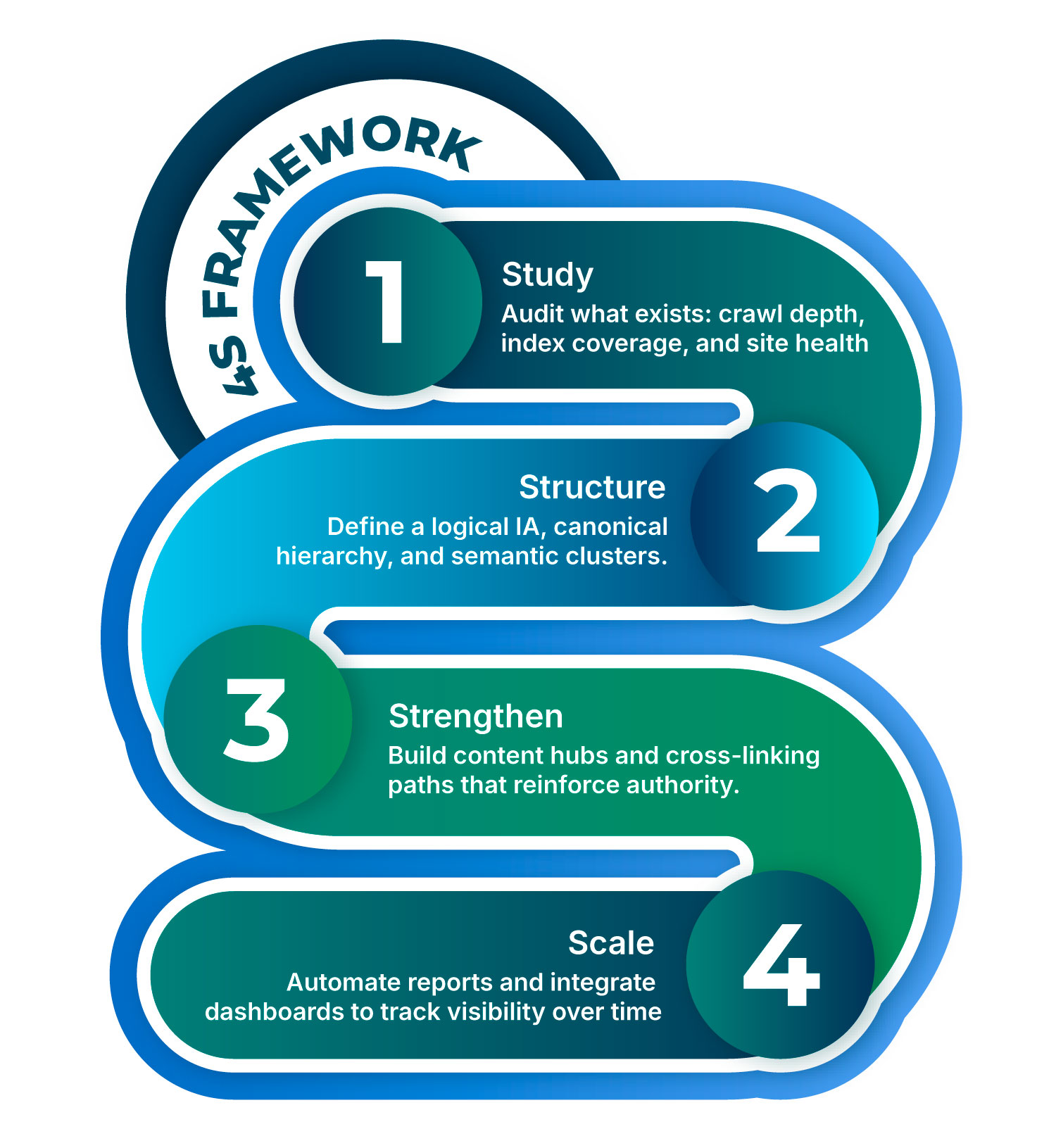
At PCG DigiVerse, we map every SEO initiative through the 4S Framework — a process any founder can understand.
- Study — Audit what exists: crawl depth, index coverage, and site health.
- Structure — Define a logical IA, canonical hierarchy, and semantic clusters.
- Strengthen — Build content hubs and cross-linking paths that reinforce authority.
- Scale — Automate reports and integrate dashboards to track visibility over time.
Each step feeds the next.
By the time you reach “Scale,” your SEO becomes a predictable system that runs itself.
Real Example — Structure Over Speed
A FinTech company we observed was publishing four blogs a week. Despite the volume, nothing ranked. We applied structured intent mapping — grouping keywords by buyer journey and cleaning internal paths.
Eight weeks later, their top-of-funnel keywords ranked on page one. Demo signups doubled — not from more content, but from aligned content. That’s the quiet power of structure: it multiplies what you already have.
Measuring What Actually Matters
Structured SEO shifts focus from vanity metrics to visible outcomes. Instead of traffic for traffic’s sake, it measures clarity — which actions drive qualified visits, leads, and sales.
“71% of B2B websites can’t connect organic traffic to ROI.”— Semrush 2024
Why Systems Always Win?
Budgets change. Algorithms update. Teams rotate. But a structured SEO system survives all of it. Because when the structure works, the signals reinforce themselves.
Google doesn’t reward tricks — it rewards patterns that prove -
Relevance, Reliability, and Clarity.
If you’ve ever Wondered why your SEO stops growing even when you’re doing “Everything Right,"
The answer isn’t effort — it’s Architecture
Campaigns may deliver spikes. Systems deliver scale.
Structured SEO transforms marketing from a cost centre into an engine of measurable growth — one that compounds even when you’re not watching.